MATERIALS FOR REAL CONDITIONS
SIGNAGE MATERIALS AND PROCESS WANGARATTA
Every material on a sign is a decision about how long it needs to last and what it has to survive. North East Victoria is not a mild climate for signage: summer sun is intense, winters bring frost and fog, dust and highway grime build up fast on anything near the Hume Freeway, and free-standing signs cop real wind loading in open paddocks and on exposed corners. We specify materials for those conditions, not just for how a sign looks on the day it goes up.
This page sets out the substrates we build with, the process every job follows from measure to handover, and the specific local conditions we design around. It is background information, not a product list to choose from yourself - the right material for your job depends on the site, the budget and how long you need the sign to last, which we work through with you at the measure.
WHAT WE BUILD WITH
MATERIALS AND EXPECTED LIFE
Realistic service life, stated up front. The cheaper option is not always wrong, but you should know which one you are buying.
ACM composite panel
10-15 years outdoors
Flat fascia panels, post-and-panel signs, pylon faces
Aluminium composite panel is two thin aluminium skins bonded to a solid core, giving a flat, rigid face that will not bow or warp in the sun. It takes a printed or vinyl-applied finish well and is the standard substrate for most flat exterior signage.
Cast vinyl film
7-10 years outdoors
Vehicle wraps, curved surfaces, long-life exterior graphics
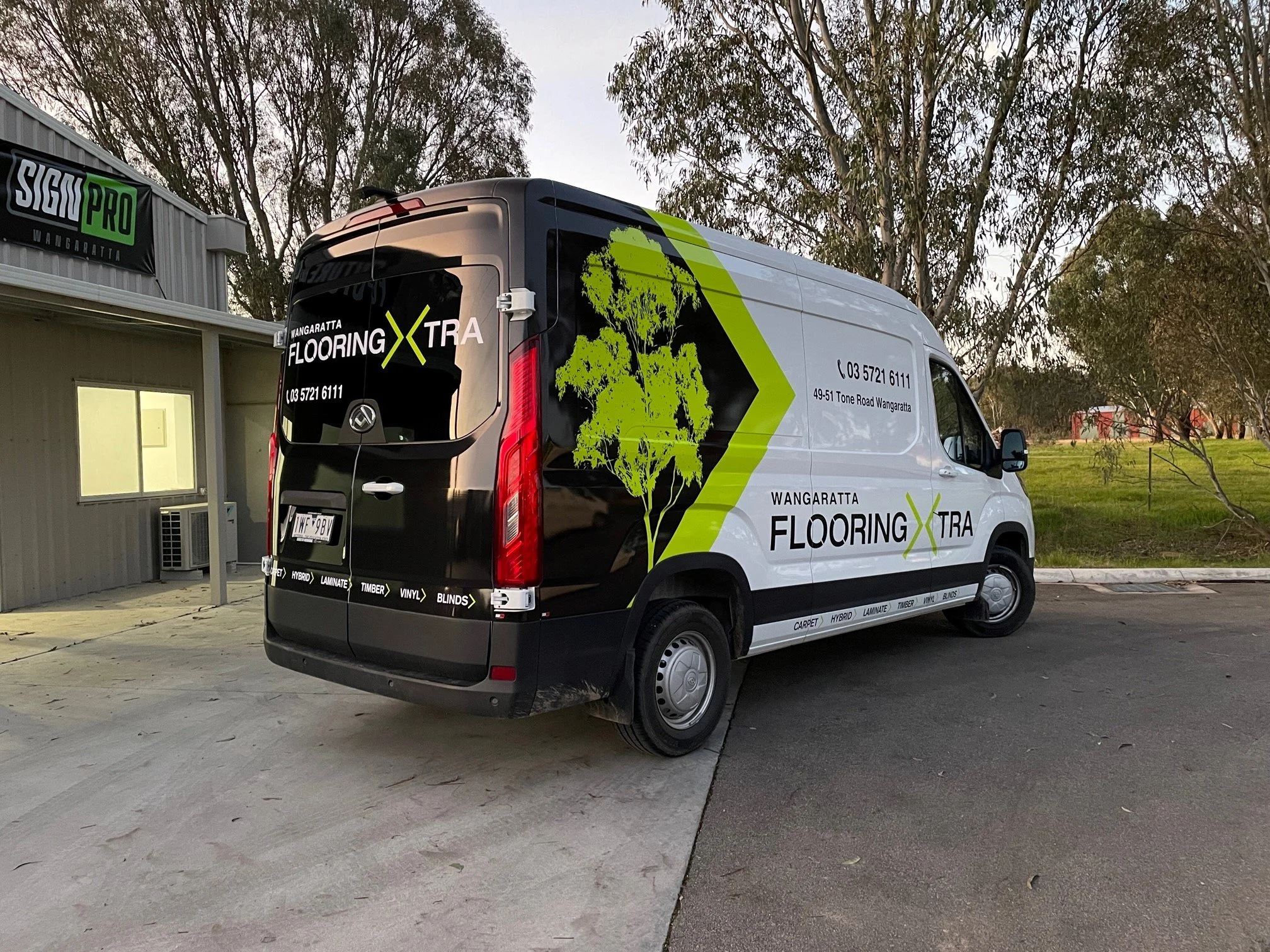
Cast vinyl is manufactured thinner and more conformable than calendered film, so it moulds into rivets, curves and compound panel shapes without lifting at the edges. It costs more per square metre but holds its colour and adhesion far longer in direct sun, which is why it is the standard for vehicle wraps and premium exterior graphics.
Calendered vinyl film
3-5 years outdoors
Flat signs, short-to-medium term graphics, budget-conscious jobs
Calendered vinyl is a thicker, more affordable film suited to flat surfaces and shorter-term applications. It is a legitimate choice for signage that will be updated or replaced within a few years - the trade-off against cast vinyl is a shorter service life and a tendency to shrink slightly on curved or riveted surfaces over time.
Laser-cut acrylic
10+ years outdoors
Dimensional letters, illuminated lettering, indoor and outdoor signage
Acrylic cuts to a crisp edge in almost any colour, holds up well to UV exposure, and diffuses LED illumination evenly when used for face-lit or halo-lit letters. It is a lighter, more economical alternative to metal letters without giving up crispness of finish.
Aluminium
15-20 years outdoors
3D letters, panel trays, sign faces, post-and-panel frames
Aluminium does not rust, takes a painted or brushed finish well, and is light enough to mount on stand-offs without heavy fixings. We use it wherever a job calls for a genuine metal look or a longer service life than acrylic or panel alone can offer.
UV-stable laminate
Adds 5+ years of UV protection
Applied over printed graphics on panels, vehicles and banners
Printed ink sits on the surface of a substrate and fades under UV exposure faster than the material underneath. A UV-stable laminate is applied over the print as a clear protective layer, holding colour and preventing scuffing so printed signage lasts closer to the substrate's own lifespan rather than fading out early.
HOW A JOB RUNS
MEASURE TO HANDOVER
MEASURE AND SITE CHECK
We measure the site or vehicle, check mounting surfaces, access and, for illuminated signs, power supply. This is where material choice starts - a shaded wall calls for different vinyl than one in full sun, and a windy corner block changes how a pylon sign gets footed.
DESIGN AND PROOF
Artwork is set out to size and you approve a scaled proof before anything is cut or printed, so colours, dimensions and layout are confirmed on paper first, not discovered on the finished sign.
PRINT AND FABRICATE
Printed elements run through the workshop with UV-stable laminate applied where needed, while cut and dimensional work - acrylic letters, aluminium panels, ACM fascia - is cut, finished and assembled to the approved proof.
QUALITY CHECK
Every piece is checked against the approved proof for colour match, cut accuracy and finish before it leaves the workshop, so problems get caught on the bench rather than on a ladder.
INSTALL AND HANDOVER
Installation is booked around your trading hours or site access, carried out by the same person who quoted and measured the job, with a final check on site before we call it finished.
THE CONDITIONS
WHAT SIGNAGE SURVIVES UP HERE
SUMMER UV AND 40-DEGREE DAYS
Direct sun fades cheap print and dries out low-grade vinyl within a season. We specify UV-stable laminates over printed work and cast vinyl for anything staying up long-term, so colour holds through a full North East Victorian summer rather than chalking out by autumn.
WINTER FROST AND FOG
Cold mornings and heavy fog put moisture and temperature swings on adhesives and illuminated fittings that a mild climate never tests. We use exterior-rated adhesives and properly sealed LED wiring so signs installed in winter perform the same as ones installed in summer.
DUST AND HIGHWAY GRIME
Signage near the Hume Freeway and on rural approach roads copes with more dust and road grime than a sheltered city shopfront ever sees. We favour finishes that clean up easily with water and a soft cloth, rather than textures that trap grime permanently.
WIND EXPOSURE ON FREE-STANDING SIGNS
Post-and-panel and pylon signs in open paddocks and on exposed corners cop real wind loading that a sheltered shopfront never sees. We size panel thickness, post depth and footing to suit the location, and choose materials that will not warp or drum in strong gusts.
READY TO UPGRADE YOUR SIGNAGE?
Not sure which material suits your site? Call 0347 168 916 and we will talk you through the options.